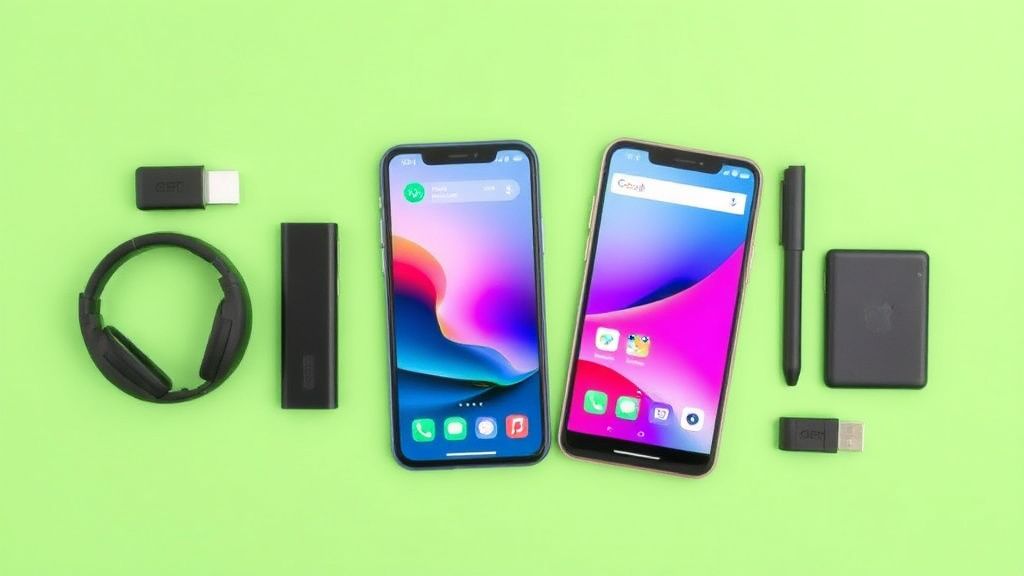
The Best Portable Chargers for Smartphones: Never Run Out of Juice
In today’s fast-paced world, running out of battery can feel like a disaster. Whether you’re traveling, working remotely, or just out for the day, a reliable portable charger (also called a power bank) is a must-have accessory. But with so many options available, how do you choose the right one? This guide breaks down the best types of portable chargers for smartphones, key features to consider, and practical buying tips.
Why You Need a Portable Charger
Smartphones are essential for communication, navigation, and productivity, but battery life doesn’t always keep up with heavy usage. A portable charger ensures you stay powered up when you need it most. Here are common scenarios where one comes in handy:
- Traveling – Airports, long flights, and road trips often lack convenient charging spots.
- Outdoor activities – Hiking, camping, or festivals may not have power outlets nearby.
- Emergency backup – Power outages or forgotten chargers can leave you stranded.
- Heavy users – If you game, stream, or use GPS frequently, extra battery life is crucial.
Types of Portable Chargers
Not all power banks are the same. The right choice depends on your needs—whether you prioritize capacity, speed, or portability.
1. Compact Power Banks (5,000–10,000mAh)
Best for: Everyday carry, short trips, and topping up once or twice.
- Pros: Lightweight, pocket-friendly, and affordable.
- Cons: Limited capacity (may only fully charge a phone 1–2 times).
- Ideal for: Commuters, students, or anyone who needs a quick boost.
2. High-Capacity Power Banks (10,000–20,000mAh)
Best for: Frequent travelers or those who need multiple charges.
- Pros: Can recharge most smartphones 2–4 times; some support fast charging.
- Cons: Bulkier and heavier than compact models.
- Ideal for: Long flights, road trips, or multi-day outings.
3. Ultra-High-Capacity Power Banks (20,000mAh and above)
Best for: Extended trips or charging multiple devices.
- Pros: Can power phones, tablets, and even laptops multiple times.
- Cons: Large and heavy; may require TSA approval for air travel.
- Ideal for: Digital nomads, photographers, or backup power during emergencies.
4. Solar-Powered Chargers
Best for: Outdoor enthusiasts and emergency preparedness.
- Pros: Renewable energy source; useful in remote areas.
- Cons: Slow charging, weather-dependent, and often requires sunlight for hours.
- Ideal for: Camping, hiking, or as a backup during power outages.
5. Wireless Power Banks
Best for: Convenience and reducing cable clutter.
- Pros: Qi-compatible (works with iPhones and Android phones that support wireless charging).
- Cons: Slower than wired charging; less efficient for high-capacity needs.
- Ideal for: Minimalists or those who hate dealing with cables.
Key Features to Consider
When shopping for a portable charger, these factors matter most:
Capacity (mAh)
- Measured in milliampere-hours (mAh), this determines how much charge the power bank holds.
- A 10,000mAh bank can recharge a 5,000mAh phone battery about twice (accounting for efficiency loss).
Output Power (Wattage and Amperage)
- Standard USB-A ports usually deliver 5V/2.4A (12W).
- USB-C Power Delivery (PD) supports fast charging (18W–100W) for compatible phones.
- Check your phone’s fast-charging specs (e.g., iPhones support PD, Samsung uses PD or PPS).
Number of Ports
- Single-port chargers are compact but limit multi-device charging.
- Dual or triple USB ports let you charge a phone, tablet, or earbuds simultaneously.
Size and Weight
- Smaller banks (5,000–10,000mAh) fit in pockets; larger ones need a bag.
- Consider if portability or capacity is more important for your lifestyle.
Build Quality and Safety
- Look for certifications like UL, CE, or FCC for safety.
- Features like overcharge protection, temperature control, and fire-resistant casing are crucial.
Extra Features
- Built-in cables (USB-C/Lightning) reduce clutter.
- LED battery indicators show remaining charge.
- Pass-through charging (charge the bank and a device at the same time).
What to Look for When Buying
Before purchasing, ask yourself these questions:
-
How often do I need extra power?
- Occasional use: 5,000–10,000mAh.
- Frequent use: 10,000–20,000mAh.
- Extended trips: 20,000mAh+.
-
Does my phone support fast charging?
- Match the power bank’s output (e.g., USB-C PD for iPhones, PPS for Samsung).
-
Will I charge other devices?
- Tablets and laptops need higher wattage (e.g., 30W+ USB-C PD).
-
How portable does it need to be?
- Smaller = more portable but less capacity.
-
Do I need special features?
- Wireless charging, solar panels, or rugged designs for outdoor use.
Final Tips for Maximizing Your Portable Charger
- Keep it charged: Power banks lose charge over time—recharge them every few months.
- Avoid extreme temperatures: Heat and cold reduce battery efficiency.
- Use quality cables: Cheap cables can slow charging or damage devices.
- Check airline rules: Banks over 27,000mAh may require airline approval.
Conclusion
A good portable charger is an investment in convenience and peace of mind. Whether you need a slim power bank for daily use or a high-capacity beast for travel, there’s an option for every need. Prioritize capacity, charging speed, and portability based on your lifestyle, and always opt for reputable brands with safety certifications. With the right power bank, you’ll never have to worry about a dead phone again.